Previous Projects

The Princeton Follow-up Study (1999-2004)
The Princeton Follow-up Study (PFS) was designed to assess changes in the familial correlations of LDL-C from the period of shared households (when the students were children) to the period of separate households (when the students, now adults, lived on their own: mean age 38 years). The PFS study sample included family dyads and triads from Visit 2 comprised of both parent-child and sibling combinations and complete families from Visit 3. Between 1999 and 2004, the PFS staff located and got follow-up data on 1632 former LRC participants, about 70% of eligible subjects after a 30-year break in contact. Approximately 2/3 of the PFS study sample (n=1066) were former students sampled in LRC visits 1, 2 and/or 3.
Key Findings and Publications
The PFS Study provided critical information about the development of cardiovascular risk factors from childhood to adulthood, or across adulthood, as well as the relationships of childhood cardiovascular risk factors and adult diseases. Because this study was family-based, the PFS also could evaluate the heritability of cardiovascular risk factors among family members.

The Princeton Health Update (2011-2014; R21 DK085363)
A brief health update was conducted in the PFS population, with the goal of ascertaining the current health status of participants. A total of 591 former schoolchildren (mean age 51) and 302 of their parents (mean age 76) participated in this health update. These data were used to evaluate the usefulness of a metabolic risk score in predicting cardiovascular disease and diabetes in the PLRS.
Key Findings and Publications
The metabolic risk score during the 1970s was significantly associated with higher risk of type 2 diabetes and cardiovascular disease by the early and mid-2000s.
In 2009 the Princeton Lipid Research Study joined the i3C Consortium and new studies were developed.
The International Childhood Cardiovascular Cohort (i3C) Consortium is a group of 7 major studies that enrolled children and adolescents in the 1970s and 1980s and have followed them into mid-life and beyond. Each study remains independent and manages its own data, but together the studies have been able to make novel findings regarding the relationships between childhood cardiovascular risk factors and adult cardiovascular disease and death. For more information about the i3C Consortium, please visit the website: https://i3cconsortium.org
I3C Consortium Outcomes Study (2015-2020; R01 HL121230)
CHILDHOOD CARDIOVASCULAR RISK FACTORS AND ADULT CV OUTCOMES: AN INTERNATIONAL AND LONG-TERM FOLLOW-UP
The primary objective of this research study was to determine the nature of relationships between levels of cardiovascular (CV) risk factors (anthropometrics, lipids, blood pressure) in childhood and CV morbidity and mortality in adulthood. The NHLBI Pediatric CV Risk Reduction Initiative noted that the lack of longitudinal studies linking CV risk factor levels in children to CV endpoints in adulthood is a major clinical research gap that needs to be spanned. This research helped to close that gap by pooling data on participants from seven major U.S. and international longitudinal cohort studies that were initiated in the 1970s and 1980s. These studies all have measured detailed CV risk factors in childhood, and have follow-up data spanning childhood and adulthood.
Key Findings and Publications
The i3C Outcomes study was very successful, recruiting over 20,000 individuals from all 7 cohorts, including 996 former schoolchildren from the PLRS. Major findings that increased childhood cardiovascular risk scores, combining measures of obesity, blood pressure, lipids and youth smoking, increased the risk of developing cardiovascular disease or cardiovascular death by 60%.
I3C Consortium APOE2 Diet Study Pilot (2022)
APOLIPOPROTEIN E2 ASSOCIATION WITH ATHEROSCLEROSIS RISK FACTORS: PILOT DIET INTERVENTION
The purpose of the study was to conduct a pilot study to determine the changes in inflammation, monocytosis, and LDL binding capacity between Apolipoprotein E2 allele carriers and E3/E3 genotype participants in relation to two different 4-week diet interventions.
It was a cross-over pilot study of two diets (4 weeks each): a healthy weight loss diet to promote lipid lowering, and a typical weight-maintenance diet, with a washout period of at least 2 weeks between diets. Assessments were conducted at baseline and post-diet for each arm of the study. Dietary adherence and weight status were evaluated weekly during the diet intervention weeks.
Key Findings
A total of 6 participants were included in this study, as planned. In this small study, we did not find significant differences in the outcomes between the two study groups.
Healthy Aging Study (R21/R33 AG057983)
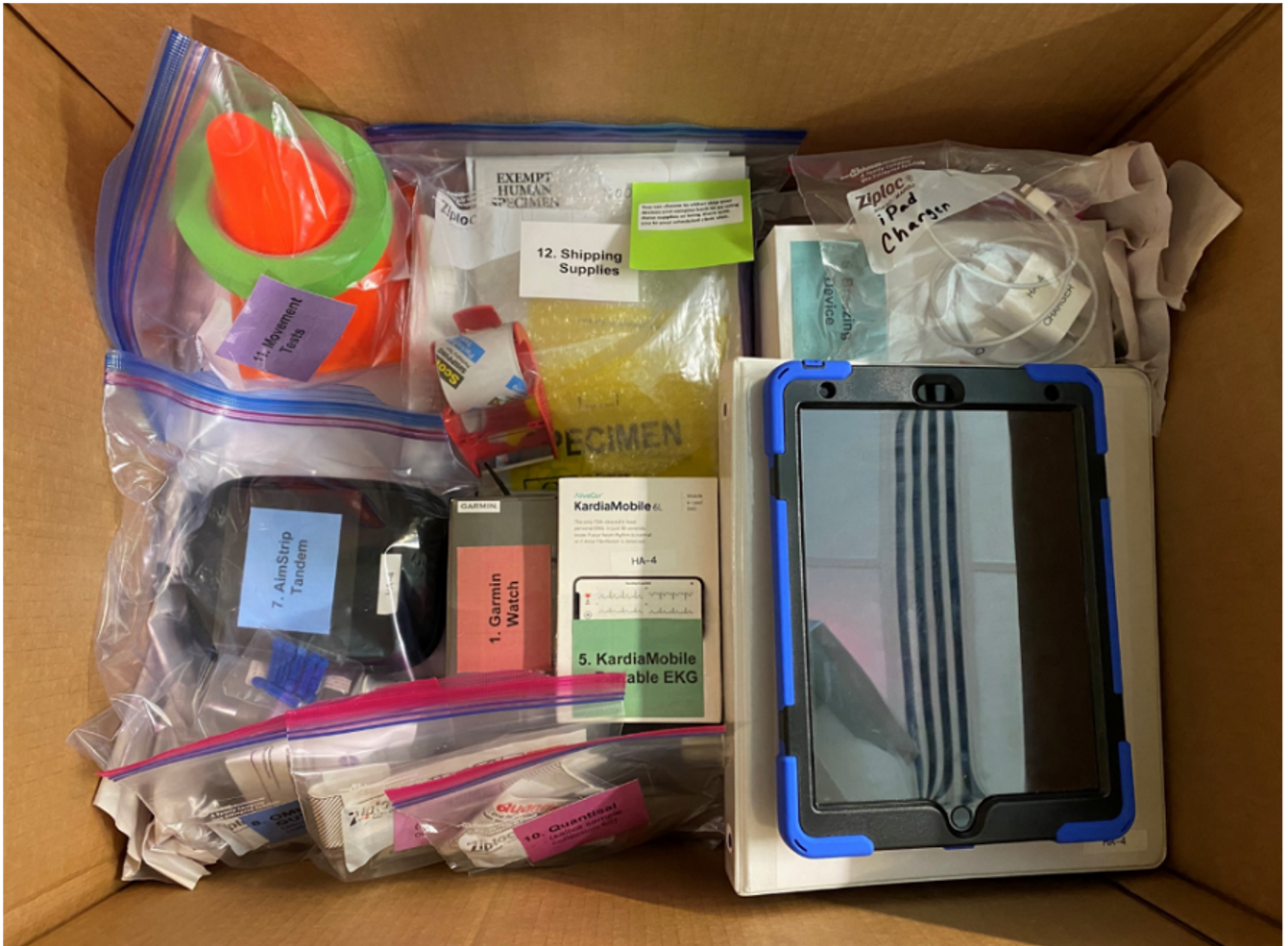
The Healthy Aging Study was a two-phase project consisting of infrastructure development (R21) and pilot study testing (R33) phases. The goal of the R21 was to develop and enhance the infrastructure for three cohorts included in the i3C Consortium: The Bogalusa Heart Study, the NHLBI Growth and Health Study, and the Princeton Lipid Research Study. Each study was responsible for conducting an inventory of the existing biorepository, study data and documentation, as well as enhancing these data through geocoding and harmonization of existing data. The R33 goals are to evaluate the feasibility of and validate methods for collecting aging-related health and cognitive data using a “Virtual Clinic” consisting of devices or online applications mailed to participants’ homes. These data will be compared with assessments conducted in a research clinic setting to validate the use of such devices for future epidemiologic studies
Phase 1: Cognitive function interview with one of our coordinators and online questionnaires
Phase 2: 1 week “Virtual Home Clinic” with a variety of health devices used at home and an in-person study visit, which included:
Standard clinic measurements (e.g., height, weight, blood pressure)
Blood draw for glucose, lipids, and specialized research assays
Cardiovascular imaging (vascular stiffness, heart electrical function [EKG])
Body composition and resting metabolic rate.
Key Findings and Publications
The study demonstrated feasibility of conducting the cognitive assessments and the validity of some (but not all) of the home-based devices relative to the standard clinic measurements.